

The European Union’s Carbon Border Adjustment Mechanism (CBAM) is reshaping international trade and creating new compliance responsibilities for exporters worldwide. Companies shipping goods into Europe must now provide detailed emissions-related information before products can enter the EU market. For many manufacturers and exporters, this marks a major operational shift.
CBAM was introduced to ensure that imported goods face environmental standards comparable to those imposed on European producers. As climate policy becomes increasingly connected to trade regulation, exporters are now expected to treat carbon reporting with the same importance as customs declarations and product classification.
Businesses that fail to prepare adequately may encounter shipment delays, increased compliance costs, customs complications, and reduced competitiveness in Europe. To remain compliant and commercially successful, exporters must strengthen emissions reporting systems, improve supply chain transparency, and coordinate closely with EU importers.
Determining Whether Products Fall Under CBAM
The first responsibility for exporters is identifying whether their products are covered under CBAM regulations. This process requires careful analysis because classification errors can create serious compliance and customs risks.
Exporters should review several critical areas before shipping goods to Europe:
HS tariff classifications
Product descriptions
Manufacturing categories
Customs documentation
Even small classification mistakes may lead to reporting inaccuracies, shipment delays, or financial penalties. Since CBAM requirements are closely linked to customs and trade rules, businesses should work with customs specialists, compliance advisors, EU import partners, and supply chain teams to verify classifications before products are exported.
A detailed classification review has now become an essential part of export preparation for companies serving the European market.
Calculating Embedded Carbon Emissions
One of the most significant requirements under CBAM is calculating embedded carbon emissions. Exporters must determine the greenhouse gas emissions generated during the manufacturing of products shipped to Europe.
Embedded emissions include both direct and indirect emissions associated with production activities. Direct emissions are generated from industrial operations such as fuel combustion, factory processing activities, and manufacturing equipment. Indirect emissions mainly come from purchased electricity consumed during production processes.
Accurate emissions calculations require strong internal data collection systems and reliable operational records. Many exporters are discovering that traditional reporting methods are insufficient for the level of transparency now expected by European regulators and importers.
The importance of accurate emissions reporting continues to grow because poor data can create major commercial risks. If exporters cannot provide verified emissions information, importers may rely on default emissions values established by regulators. In many cases, these default values are significantly higher than actual emissions levels, making products more expensive and less competitive within the EU market.
As CBAM expands over time, reliable carbon reporting may become a major competitive advantage for exporters operating internationally.
Building Carbon Accounting Systems
CBAM is forcing many exporters to modernize outdated reporting systems. Numerous businesses still rely on spreadsheets, fragmented records, or manual reporting processes that are not suitable for long-term emissions compliance management.
To meet CBAM requirements effectively, companies must build structured carbon accounting systems capable of tracking operational and environmental data consistently.
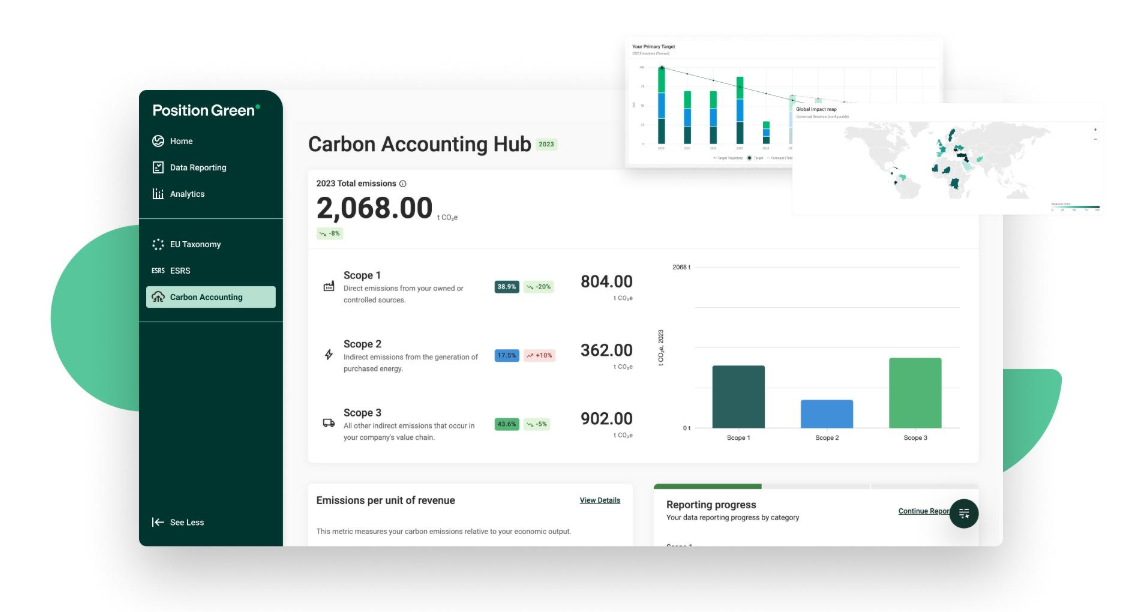
Key areas businesses now need to monitor include:
Energy consumption
Fuel usage
Production emissions
Supplier emissions
Electricity sourcing
Manufacturing efficiency
These systems depend on data gathered from multiple operational sources. Production facilities must maintain accurate records regarding energy usage and manufacturing activities. Utility providers supply electricity consumption data and renewable energy documentation. Supply chain partners increasingly play an important role by providing transportation records, sourcing information, and supplier emissions disclosures.
Companies that digitize emissions tracking early are likely to adapt more successfully as climate-related trade regulations continue evolving.
Improving Supply Chain Transparency
CBAM is also transforming how exporters manage supply chains. Businesses can no longer focus only on emissions generated within their own factories. Instead, companies now require visibility into emissions generated throughout the supply chain.
Exporters increasingly need detailed information regarding:
Raw material sourcing
Supplier emissions
Transportation activities
Manufacturing practices
Energy usage
Carbon-intensive suppliers can significantly increase the total emissions profile of exported products. As a result, many businesses are reevaluating supplier relationships and operational strategies.
Companies worldwide are now investing in cleaner operations by shifting toward renewable energy, improving manufacturing efficiency, modernizing production systems, and selecting lower-emission suppliers.
Supply chain transparency is no longer viewed only as an ESG initiative. Under CBAM, it is becoming a direct trade compliance requirement tied to long-term access to the European market.
Coordinating Closely With EU Importers
Strong collaboration between exporters and EU importers has become essential under CBAM. Importers rely heavily on exporters for emissions data, production information, and compliance documentation.
Exporters should establish dedicated compliance contacts responsible for managing CBAM communication and reporting. Internal coordinators help ensure importer requests are handled efficiently and that emissions documentation remains organized and consistent.
Businesses should also align reporting formats with EU importers as early as possible. Standardized reporting templates reduce inconsistencies, simplify verification procedures, and improve operational efficiency.
Sharing emissions data early is equally important. Waiting until shipment deadlines creates unnecessary pressure and increases the likelihood of delays or documentation errors. Importers need sufficient time to review emissions information and prepare regulatory submissions before goods arrive in Europe.
Companies should also clarify contractual responsibilities regarding reporting obligations, verification procedures, documentation management, and carbon-related costs. Strong collaboration can help exporters strengthen long-term commercial relationships with European customers.
Preparing for Verification and Audits
As CBAM implementation progresses, exporters should expect increasing scrutiny regarding emissions calculations and reporting methodologies. Verification standards are expected to become stricter as regulators refine compliance expectations.
Businesses should maintain organized records covering:
Energy usage
Production activities
Supplier disclosures
Emissions calculations
Reporting methodologies
Strong documentation systems are critical for demonstrating compliance credibility. Companies without reliable audit trails may face shipment delays, reporting disputes, or increased financial exposure.
Audit readiness is quickly becoming an essential part of international trade operations. Exporters that establish structured documentation systems early are more likely to adapt successfully as climate-linked trade regulations continue expanding worldwide.
Conclusion
CBAM represents one of the most significant changes to international trade compliance in recent years. Exporters shipping goods to Europe must now integrate carbon transparency directly into business operations, reporting systems, and supply chain management strategies.
The companies most likely to succeed under the new system will be those that invest early in emissions tracking, supply chain visibility, carbon accounting systems, and importer collaboration. Carbon transparency is no longer simply an environmental concern - it is becoming a key factor influencing market access, competitiveness, and long-term growth in Europe.