
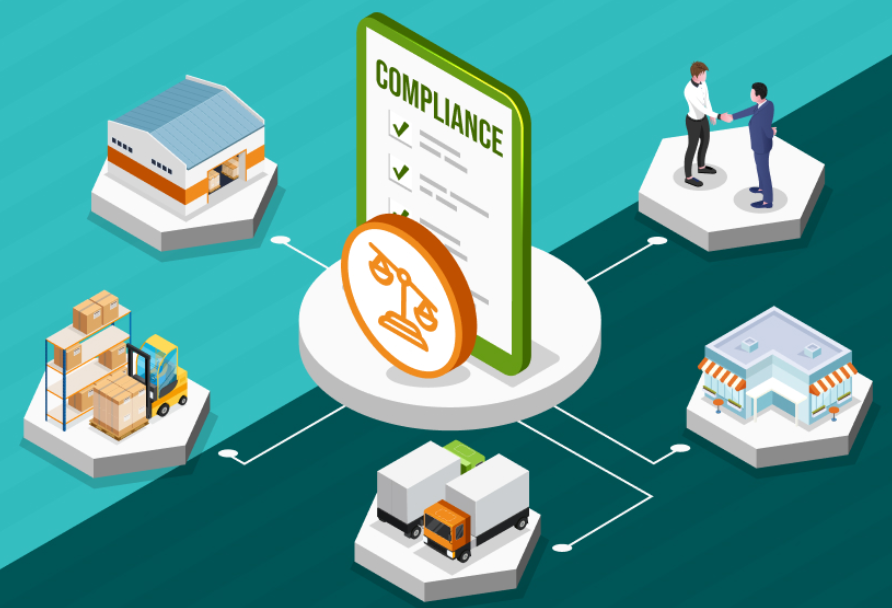
Global trade is no longer driven only by cost, speed, and market access. In 2026, companies are being evaluated on how responsibly they operate across their entire supply chain. Environmental, Social, and Governance (ESG) standards have become deeply connected with trade compliance, transforming the way businesses manage imports, exports, sourcing, logistics, and supplier relationships.
Governments, investors, and consumers now expect businesses to prove that their products are ethically sourced, environmentally responsible, and compliant with international regulations. What was once considered a sustainability initiative has now become a core business requirement.
The Growing Connection Between Trade Compliance and ESG
Trade compliance traditionally focused on customs regulations, sanctions screening, export controls, tariffs, and documentation accuracy. ESG, on the other hand, focused on environmental impact, labor rights, ethical sourcing, and corporate governance.
Today, these two areas are merging rapidly.
New regulations in the European Union, United Kingdom, and North America are pushing businesses to monitor not only where products come from, but also how they are produced. Companies are increasingly required to track emissions, labor practices, sourcing transparency, and supplier risks throughout the supply chain. The EU’s evolving frameworks such as CBAM (Carbon Border Adjustment Mechanism), CSDDD, and supply chain due diligence laws are changing international trade operations. Businesses that fail to comply may face shipment delays, penalties, reputational damage, or even restrictions on market access.
Why ESG Is Becoming a Trade Requirement
One of the biggest reasons behind this shift is supply chain transparency. Large multinational companies are now expected to monitor suppliers beyond Tier 1 vendors. Regulators want companies to identify environmental risks, forced labor exposure, carbon emissions, and unethical sourcing practices throughout the value chain.
At the same time, investors are using ESG performance as a major factor in business evaluation. Companies with stronger ESG compliance are often seen as more resilient and lower-risk in an unstable global trade environment.
The pressure is also commercial. Many global buyers now require ESG reporting from exporters and suppliers before signing contracts. Smaller manufacturers and MSMEs are increasingly being asked to share sustainability data to remain part of international supply chains.
ESG Compliance Is Reshaping Supply Chains
Modern supply chains are becoming more data-driven and compliance-focused. Businesses are investing in AI-powered monitoring systems, supplier verification tools, and real-time trade visibility platforms to manage ESG risks.
The focus areas now include:
Ethical sourcing
Carbon emission tracking
Forced labor prevention
Supplier transparency
Waste reduction
Sustainable logistics
Governance and audit readiness
Companies are also redesigning logistics strategies to reduce environmental impact while maintaining compliance efficiency. The increasing complexity of global trade has made ESG a strategic issue rather than just a reporting exercise. According to recent industry analysis, businesses are moving away from periodic audits toward continuous AI-enabled monitoring systems that track supply chain risks in real time.
The Role of Technology in ESG Trade Compliance
Technology is becoming the backbone of modern compliance systems. AI, blockchain, automation, and predictive analytics are helping businesses manage large volumes of trade and sustainability data more efficiently.
Digital compliance tools now help companies:
Verify supplier credentials
Track shipment emissions
Monitor sanctions and regulatory changes
Detect compliance risks early
Improve customs documentation accuracy
Generate ESG reports automatically
This shift is especially important because global regulations are becoming stricter and more fragmented across regions. Businesses operating internationally must now adapt to different ESG disclosure standards and compliance frameworks simultaneously.
ESG Risks Are Becoming Business Risks
Companies that ignore ESG-linked trade compliance face multiple operational challenges. Shipment delays, supplier disruptions, customs investigations, and reputational crises are becoming more common as regulators increase enforcement.
In sectors like automotive, electronics, critical minerals, fashion, and manufacturing, ESG scrutiny is particularly high because of concerns around emissions, labor practices, and sourcing transparency. Researchers are also warning about the growing problem of “greenwashing,” where companies exaggerate sustainability claims without sufficient proof. This has increased the demand for verified ESG data and third-party audits.
The Future of Global Trade Compliance
The future of trade compliance will be built around transparency, sustainability, and digital accountability. Businesses are no longer competing only on pricing or production speed. They are competing on trust, traceability, and responsible operations.
Trade compliance and ESG are now interconnected pillars of global business strategy. Companies that invest early in sustainable sourcing, digital compliance systems, and transparent supply chains will be better positioned to manage future regulations and maintain global market access.
As global trade regulations continue evolving, ESG compliance is moving from a “good-to-have” initiative to a mandatory operational requirement for businesses of every size.