
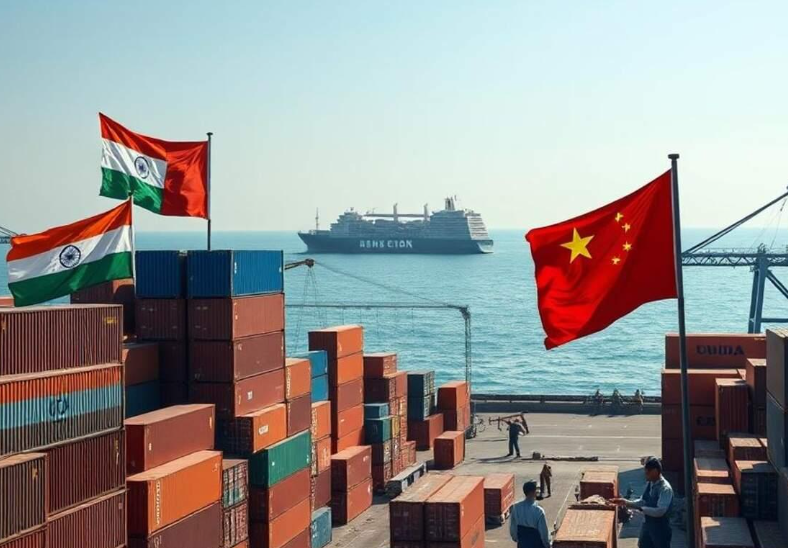
Global shipping and logistics giant Maersk has announced the launch of its new FI2 Ocean Service, a strategic shipping route designed to improve maritime connectivity between India and China. The move comes at a time when businesses across Asia are increasingly prioritizing resilient supply chains, faster transit times, and more reliable logistics networks.
According to a report published by The Economic Times, the FI2 service aims to provide enhanced shipping solutions for businesses involved in one of Asia's most important trade corridors.
As India expands its manufacturing capabilities and strengthens its export ecosystem, improved maritime connectivity is becoming increasingly critical for supporting international trade and industrial growth.
Why India-China Shipping Connectivity Matters
Despite geopolitical differences, India and China remain important trading partners. Bilateral trade includes electronics, machinery, chemicals, industrial components, pharmaceuticals, textiles, and various raw materials.
Every year, billions of dollars worth of goods move between factories, ports, warehouses, and distribution centers across both countries. Efficient shipping routes help businesses reduce transportation costs, maintain inventory levels, and meet customer delivery expectations.
As global supply chains become more interconnected, reliable shipping services play an essential role in maintaining trade flows and minimizing disruptions.
Understanding the FI2 Ocean Service
The FI2 Ocean Service is part of Maersk's strategy to strengthen regional maritime connectivity and improve cargo transportation efficiency across major Asian markets.
The service is expected to offer:
Feature | Benefit |
Regular sailing schedules | Greater shipment predictability |
Enhanced port connectivity | Improved cargo movement |
Faster transit efficiency | Reduced delivery delays |
Integrated logistics support | Better supply chain visibility |
For businesses that rely on just-in-time manufacturing and inventory management, even small improvements in shipping reliability can significantly impact operational performance.
How the New Service Supports Exporters
Indian exporters often face challenges such as shipment delays, port congestion, and unpredictable transit schedules. Improved ocean connectivity helps businesses better manage production planning and customer commitments.
Trade Flow Through the FI2 Service
Manufacturing Unit ↓ Indian Export Port ↓ FI2 Ocean Route ↓ Chinese Import Port ↓ Distribution Network ↓ End Customer
More predictable shipping schedules allow exporters to optimize inventory management and improve customer satisfaction.
Industries expected to benefit include:
Electronics manufacturing
Engineering goods
Automotive components
Industrial machinery
Chemicals and specialty materials
These sectors depend heavily on efficient transportation links for both imports and exports.
Impact on Supply Chain Resilience
Recent years have exposed vulnerabilities in global supply chains. Events such as the pandemic, geopolitical tensions, port congestion, and shipping disruptions highlighted the importance of diversified and reliable logistics networks. Businesses today are looking for transportation partners that can provide consistency and flexibility even during periods of uncertainty.
Key Supply Chain Benefits
Area | Expected Improvement |
Inventory Planning | Better forecasting |
Delivery Reliability | Improved consistency |
Logistics Efficiency | Faster cargo movement |
Business Continuity | Reduced disruption risk |
By strengthening direct maritime connections, the FI2 service contributes to more resilient regional trade networks.
Growing Role of India in Global Manufacturing
India's manufacturing sector has experienced significant growth in recent years, supported by initiatives such as Production Linked Incentive (PLI) schemes, infrastructure investments, and increasing foreign direct investment.
Several multinational companies are expanding production facilities in India as part of broader supply chain diversification strategies. This trend is creating greater demand for efficient shipping services connecting Indian manufacturing hubs with global markets. Improved maritime connectivity helps manufacturers source components more efficiently while enabling finished products to reach international customers faster.
Digital Transformation in Shipping
Modern logistics is no longer limited to moving containers from one port to another. Shipping companies increasingly rely on digital technologies to improve visibility, optimize routes, and enhance customer experience. Maersk and other leading logistics providers are investing in:
Real-time cargo tracking
Digital documentation systems
Supply chain analytics
Automated logistics management
These technologies help businesses monitor shipments more effectively and make data-driven supply chain decisions.
What This Means for Trade Growth
As trade volumes continue to rise across Asia, investments in maritime infrastructure and shipping services become increasingly important. Industry analysts expect stronger shipping connectivity to contribute to:
Trade Driver | Potential Outcome |
Faster cargo movement | Increased trade efficiency |
Reduced logistics delays | Better customer service |
Improved connectivity | Greater export competitiveness |
Stronger supply chains | Enhanced economic growth |
For exporters, reliable shipping routes are often as important as production capacity and market demand.
Future Outlook
The launch of the FI2 Ocean Service reflects broader changes occurring across global trade and logistics networks. Companies are prioritizing resilience, efficiency, and regional integration as they adapt to evolving economic conditions.
India's growing role as a manufacturing and export hub means demand for advanced logistics solutions will likely continue increasing. Shipping providers that invest in connectivity, technology, and operational efficiency will play a crucial role in supporting future trade growth. As businesses seek faster and more dependable transportation networks, services like FI2 are expected to strengthen Asia's position as a key driver of global commerce. Maersk's FI2 Ocean Service represents an important development for India–China trade and regional supply chains. By enhancing shipping connectivity, improving transit reliability, and supporting efficient cargo movement, the service offers valuable benefits for exporters, importers, and manufacturers.
In an increasingly competitive global economy, strong logistics infrastructure remains a critical foundation for trade growth. The FI2 service demonstrates how strategic investments in maritime connectivity can help businesses improve efficiency, reduce uncertainty, and capitalize on expanding international opportunities.