
Why MSMEs Should Care About India-South Korea FTA Talks
When governments discuss Free Trade Agreements (FTAs), it often sounds like something that only affects large corporations. But for Indian MSMEs, these agreements can directly influence pricing, competition, export opportunities, and even survival in certain sectors.
India and South Korea are expected to review their existing trade agreement on May 25 after concerns over India’s growing trade deficit with Korea. According to reports, India wants to revisit parts of the agreement that may be hurting domestic industries and limiting export growth.
For MSMEs, this review matters because many small businesses have been competing with cheaper imports while also struggling to access foreign markets.
The Main Problem: Imports Have Grown Faster Than Indian Exports
Since the India-South Korea CEPA agreement came into force in 2010, trade between both countries has increased significantly. However, a large portion of that growth has come from imports into India.
Products like machinery, steel, automobile components, chemicals and electronics have entered India in large volumes from South Korea.
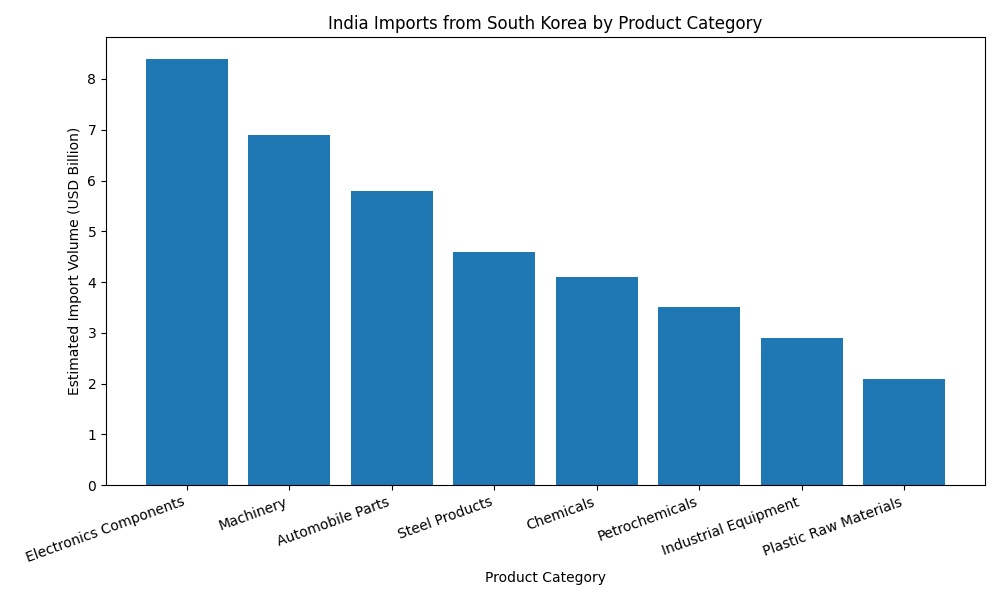
For many MSMEs in manufacturing, this created intense price competition. Small businesses often struggle to match the scale, technology, and pricing advantages of Korean suppliers. At the same time, Indian MSMEs exporting products to South Korea have faced challenges such as regulatory standards, certification requirements, and market access barriers.
This imbalance is one of the key reasons India wants to review the agreement.
What Could Change After the Review
The review talks are expected to focus on creating a more balanced trade relationship.
For MSMEs, the most important areas to watch include improved export access and stronger protection against unfair competition.
India may push for:
easier entry for Indian products into South Korea,
stricter rules of origin,
and safeguards for sensitive sectors affected by cheap imports.
Rules of origin are especially important. Sometimes products from third countries enter India through FTA routes to benefit from lower duties. If India tightens these rules, it could help protect local manufacturers from indirect dumping.
For MSMEs in sectors like engineering goods, auto components, textiles, chemicals, and processed food, even small policy adjustments can make a noticeable difference.
A Bigger Shift in India’s Trade Strategy
The South Korea review is part of a broader change in India’s economic approach.
India is no longer signing trade deals simply to increase trade volume. Policymakers are now asking whether these agreements actually support domestic manufacturing and employment. This is especially important for MSMEs because small businesses form the backbone of India’s industrial economy.
The government’s focus on:
“Make in India,”
supply chain localization,
and production-linked manufacturing
shows that future trade agreements may become more protective of local industry interests.
That does not mean India is becoming anti-trade. Instead, it suggests the country wants trade agreements that create balanced growth rather than one-sided import dependence.
Opportunities MSMEs Should Watch For
If the negotiations result in better market access, several MSME sectors could benefit.
Indian exporters in sectors such aspharmaceuticals, food processing, marine products, engineering goods and textiles may find it easier to expand into the Korean market.
South Korea is a high-value economy with strong consumer purchasing power. Even a small increase in Indian MSME exports to that market could create significant revenue opportunities.
Another possible benefit is investment collaboration. Korean companies looking to diversify supply chains may increasingly partner with Indian MSMEs for sourcing and manufacturing.
The Reality MSMEs Must Understand
While policy changes can help, MSMEs also need to prepare themselves. Many small businesses struggle not because of tariffs alone, but because of:
inconsistent quality standards,
weak certifications,
poor packaging,
or lack of export readiness.
If India negotiates better access to foreign markets, MSMEs that are already improving product quality and compliance standards will benefit the most.
In other words, trade agreements create opportunities but businesses still need the capability to capture them.
Conclusion
The India-South Korea FTA review may appear like a high-level diplomatic discussion, but its effects could reach thousands of Indian MSMEs.
For small manufacturers and exporters, the talks represent something larger: India’s attempt to build a trade policy that supports domestic industry while remaining globally competitive.
Whether the review leads to major policy changes or gradual adjustments, MSMEs should pay close attention. The future of trade will not only depend on government negotiations, but also on how prepared Indian businesses are to compete internationally.