
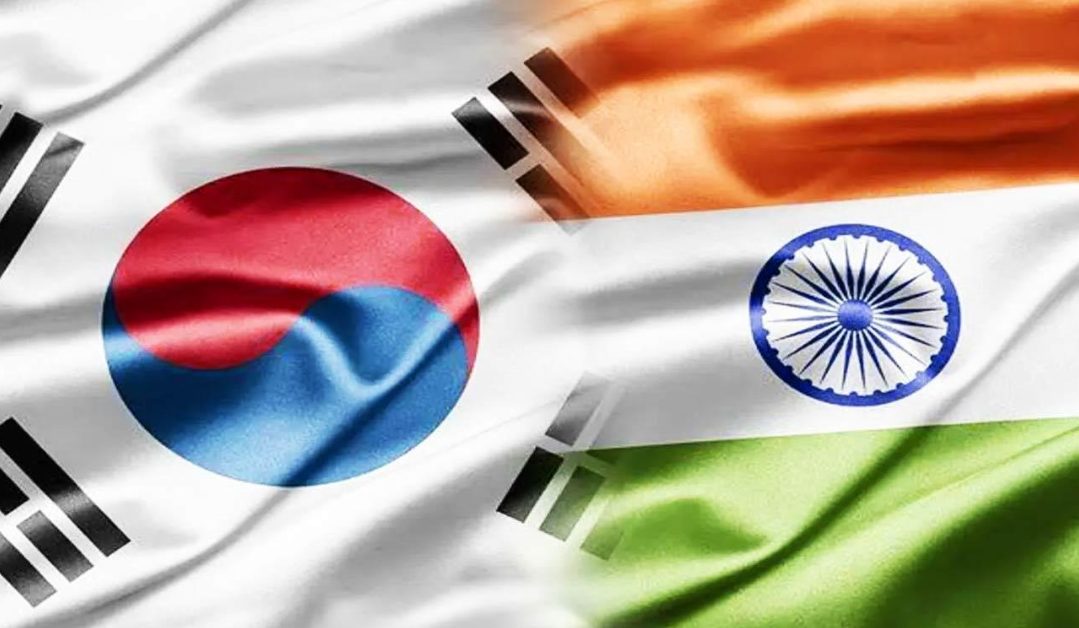
India and South Korea have taken another significant step toward strengthening their economic partnership. The 12th round of negotiations to upgrade the India–Korea Comprehensive Economic Partnership Agreement (IK CEPA) was held in New Delhi from 25–27 May 2026, signaling a renewed commitment from both nations to create a modern, balanced, and future-oriented trade agreement.
The discussions follow the Joint Declaration signed in April 2026 by India's Commerce and Industry Minister Piyush Goyal and South Korea's Trade Minister Yeo Han-koo during the Korean President's state visit to India. Both governments agreed to accelerate negotiations and work toward a more comprehensive economic framework that reflects evolving global trade realities.
For exporters, manufacturers, investors, and businesses operating in international markets, the negotiations represent much more than another trade policy update. They reflect a strategic effort by two major Asian economies to strengthen supply chains, improve market access, encourage investment, and build cooperation in emerging sectors such as digital trade and advanced manufacturing.
Why the India–Korea Relationship Matters
South Korea is one of Asia's most technologically advanced economies and a global leader in electronics, semiconductors, automotive manufacturing, shipbuilding, batteries, advanced materials, and industrial innovation.
For India, Korea represents not only an important trading partner but also a significant source of technology, investment, and industrial expertise. Major Korean companies have already established a strong presence in India, contributing to manufacturing, consumer electronics, automobiles, and infrastructure development. As India continues its push toward becoming a global manufacturing hub, deeper economic integration with Korea could play an important role in supporting industrial growth and export competitiveness.
Why Is the CEPA Being Upgraded?
The India–Korea CEPA originally came into force in 2010 with the objective of promoting trade and investment between the two countries. While bilateral trade has grown substantially since then, both sides acknowledge that significant untapped potential remains.
One of the key issues highlighted during the latest negotiations was India's growing trade deficit with South Korea. Since the implementation of CEPA, imports from Korea have grown faster than Indian exports, creating concerns about trade balance. The upgrade negotiations aim to address these concerns while creating a framework that benefits both economies. The goal is not merely to increase trade volumes but to ensure that growth is balanced, sustainable, and mutually beneficial.
Key Areas Under Discussion
During the latest round of negotiations, both sides discussed several critical areas that could reshape bilateral trade relations.
Trade in Goods
Trade in Goods remains one of the most important pillars of the negotiations. Discussions focus on tariff reductions, product market access, customs procedures, and eliminating barriers that restrict trade flows.
For Indian exporters, expanded access to the Korean market could create opportunities across sectors such as pharmaceuticals, chemicals, engineering goods, agricultural products, textiles, automotive components, and processed foods.
Trade in Services
Services have become a major component of modern trade agreements. India has strong capabilities in IT services, consulting, finance, engineering services, digital solutions, and professional services.
Improved market access for Indian service providers could strengthen India's position in Korea's rapidly evolving digital economy.
Investment Cooperation
Investment remains a critical growth driver for both countries. Enhanced investment provisions could encourage greater Korean participation in India's manufacturing ecosystem while creating opportunities for Indian businesses to expand partnerships in Korea.
Investment cooperation can support technology transfer, job creation, industrial modernization, and export-oriented manufacturing.
Rules of Origin
Rules of Origin determine whether a product qualifies for preferential tariff treatment under a trade agreement. Clearer and more effective Rules of Origin can help prevent trade circumvention while ensuring genuine manufacturers benefit from the agreement's provisions.
For exporters, understanding these rules will be essential for maximizing the benefits of any future CEPA upgrades.
Sanitary and Phytosanitary Standards
For agricultural and food exporters, SPS standards often determine market access.
The ongoing discussions aim to improve regulatory cooperation and reduce technical barriers, potentially making it easier for Indian agricultural and food products to enter the Korean market while maintaining high safety standards.
New Focus Areas: Digital Trade and Supply Chains
One of the most significant outcomes of the latest negotiation round was the decision to establish dedicated sub-groups focusing on digital trade, supply chain cooperation, and strategic industrial cooperation. This reflects a broader shift in global trade policy.
Modern trade agreements are no longer limited to tariffs and customs duties. Increasingly, they address digital commerce, data flows, technology collaboration, innovation ecosystems, and supply chain resilience.Digital trade has become especially important as businesses increasingly rely on cross-border data exchange, e-commerce platforms, cloud infrastructure, and digital services.
Similarly, recent global disruptions have highlighted the importance of resilient supply chains. Stronger India–Korea cooperation could help both countries diversify sourcing networks and reduce vulnerabilities in critical industries.
Opportunities for Indian Exporters
If successfully concluded, the upgraded CEPA could create several opportunities for Indian businesses. Engineering goods manufacturers could benefit from improved market access to Korea's industrial ecosystem. Pharmaceutical exporters may find new opportunities in one of Asia's most sophisticated healthcare markets. IT service providers and digital companies could gain from enhanced digital trade provisions. Agricultural exporters may benefit from improved regulatory cooperation and market access mechanisms.
MSMEs could leverage stronger trade facilitation measures to enter new international markets with lower compliance costs and fewer administrative barriers.
Strategic Industrial Cooperation
Perhaps the most forward-looking element of the negotiations is the focus on strategic industrial cooperation. Both India and Korea are investing heavily in sectors that will define future economic growth, including semiconductors, electric vehicles, battery technology, advanced manufacturing, artificial intelligence, robotics, clean energy, and digital infrastructure.
Collaboration in these areas could create opportunities that extend far beyond traditional trade. Joint ventures, technology partnerships, research collaborations, and industrial investments could strengthen both countries' positions in global value chains.
What Businesses Should Watch
Exporters and manufacturers should closely monitor developments in the CEPA upgrade process. Companies should begin assessing which products may benefit from improved market access, identifying potential Korean partners, and understanding sector-specific opportunities that may emerge under the revised framework.
Businesses involved in digital services, advanced manufacturing, automotive components, electronics, pharmaceuticals, and industrial goods should pay particular attention to the negotiations, as these sectors are likely to see significant developments.
Conclusion
The 12th round of India–Korea CEPA upgrade negotiations demonstrates a strong commitment from both governments to build a more modern and future-ready economic partnership. The discussions go beyond traditional trade concerns and address some of the most important drivers of global economic growth, including digital trade, supply chain resilience, investment, industrial cooperation, and technological collaboration.
For Indian exporters and manufacturers, the upgraded CEPA could open new pathways into one of Asia's most advanced economies while supporting India's broader ambitions to strengthen its position in global trade and manufacturing. As negotiations continue, businesses that stay informed and prepare early will be best positioned to benefit from the next phase of India–Korea economic cooperation.