
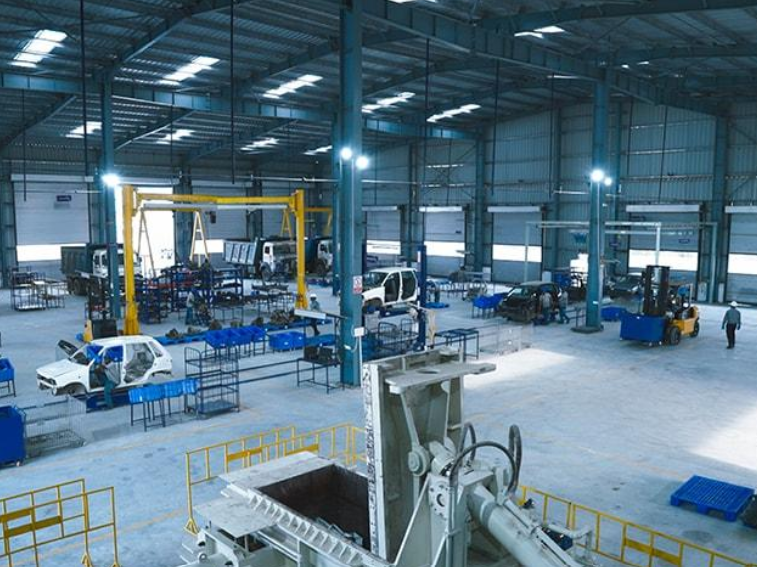
India’s automobile sector is entering one of its most challenging regulatory transitions in years. The newly implemented End-of-Life Vehicle (ELV) Rules are intended to push the country toward a cleaner and more circular automotive economy. But instead of accelerating compliance, the policy has triggered a major industry-wide shortfall.
According to recent industry reports, Indian auto manufacturers missed FY26 vehicle scrappage targets by nearly 70%, raising concerns about the practicality of the current framework and the readiness of India’s recycling ecosystem.
What Are the New ELV Rules?
The Ministry of Environment, Forest and Climate Change introduced the Environment Protection (End-of-Life Vehicle) Rules, 2025, which came into effect on April 1, 2025. The rules aim to create a structured vehicle scrapping ecosystem under the Extended Producer Responsibility (EPR) model.
Under the regulation:
Automakers must ensure scrappage of vehicles reaching end-of-life
Steel recovered from scrapped vehicles contributes toward compliance targets
Manufacturers are required to obtain EPR certificates
Targets are linked to the weight of recycled automotive steel
The government’s larger objective is to reduce pollution, formalize vehicle recycling, improve road safety, and strengthen circular manufacturing practices.
However, implementation has proven far more difficult than expected.
Why the Industry Missed Targets by 70%
The core issue emerged after a draft amendment issued in March 2026 removed the allowance for “other steel scrap materials” in EPR certification calculations.
Previously, companies could partially meet compliance requirements using broader automotive steel scrap sources. Now, only steel recovered directly from scrapped vehicles qualifies.
FY26 ELV Compliance Gap
Required Vehicles for Scrappage : 7.62 lakh Actual Vehicles Scrapped : 2.42 lakh Compliance Gap : ~70%
This created a massive mismatch between policy expectations and ground-level infrastructure readiness. Industry executives argue that India currently lacks:
Enough registered scrapping facilities
Adequate inflow of old vehicles
Large-scale automated testing centers
Mature recycling logistics systems
As a result, the entire sector risks being labeled non-compliant despite structural limitations outside direct manufacturer control.
The Financial Shock to Automakers
The policy impact extends beyond operational compliance. Reports suggest automakers may need to make significant accounting provisions under environmental liability rules, potentially leading to an estimated ₹25,000 crore hit to FY26 profits.
Estimated Impact Areas
Area | Potential Effect |
Profitability | Higher compliance costs |
Manufacturing | Increased recycled material obligations |
Supply Chains | Dependence on certified scrap networks |
Dealers | Reduced resale value of older vehicles |
Consumers | Higher replacement costs |
Logistics Fleets | Accelerated vehicle replacement pressure |
This could affect passenger vehicles, commercial vehicles, and two-wheeler manufacturers alike.
Why India’s Scrappage Ecosystem Is Struggling
India’s formal vehicle recycling ecosystem is still in an early growth phase. Although the government has introduced Registered Vehicle Scrapping Facilities (RVSFs) and automated fitness testing stations, experts believe the current network remains insufficient for nationwide ELV implementation.
Structural Bottlenecks
Challenge | Industry Impact |
Low ELV inflow | Insufficient scrap generation |
Limited testing stations | Delayed deregistration |
Weak recycling infrastructure | Processing delays |
GST complexities | Higher formal-sector costs |
Informal recycling competition | Reduced compliance participation |
Many older vehicles continue operating informally instead of entering certified scrappage channels.
The Circular Economy Opportunity
Despite current challenges, the ELV policy reflects a larger global trend toward sustainable manufacturing and circular economies. Countries across Europe, Japan, and parts of North America already operate mature automotive recycling ecosystems where large portions of vehicle materials are recovered and reused.
India’s long-term goals include:
Reducing raw material dependence
Lowering steel imports
Improving environmental sustainability
Creating organized recycling jobs
Supporting green manufacturing targets
Evolution of India’s ELV Ecosystem
Old Vehicle Usage ↓ Fitness Testing ↓ Certified Scrappage ↓ Steel Recovery & Recycling ↓ Circular Automotive Manufacturing
If implemented effectively, the policy could eventually strengthen India’s automotive supply chain resilience and sustainability profile.
What the Industry Wants Changed
Automobile manufacturers and industry bodies such as the Society of Indian Automobile Manufacturers are urging policymakers to reconsider parts of the framework. Key demands include:
Temporary flexibility on scrap sourcing
Gradual target escalation
Faster development of scrappage infrastructure
Simplified compliance mechanisms
Better incentives for vehicle owners to scrap older vehicles
Industry leaders argue that without ecosystem readiness, aggressive compliance targets could unintentionally disrupt manufacturing investment and vehicle affordability.
The Bigger Picture for India’s Auto Sector
The ELV rules highlight a broader reality facing global industries: sustainability transitions are becoming mandatory, not optional. However, environmental regulation succeeds only when infrastructure, incentives, and operational capacity evolve together. India’s automotive industry now stands at a critical crossroads:
Push forward aggressively and risk compliance instability
Or recalibrate implementation timelines while building stronger recycling infrastructure
The next few years will determine whether India can build one of the world’s largest circular automotive ecosystems or whether regulatory pressure outpaces ecosystem readiness.