

Global supply chains are once again entering a period of rising instability. After gradually recovering from the severe disruptions experienced during the COVID-19 pandemic, international logistics networks are facing renewed pressure from geopolitical conflicts, shipping disruptions, rising freight rates, and increasing trade uncertainty.
According to recent industry reports, global supply chain stress indicators are climbing again after months of relative stabilization. Businesses across manufacturing, exports, freight forwarding, and retail are beginning to experience longer transit times, higher transportation costs, and increasing operational unpredictability.
The latest developments highlight how fragile global trade systems remain even years after the pandemic disrupted international commerce.
Why Supply Chain Stress Is Increasing Again
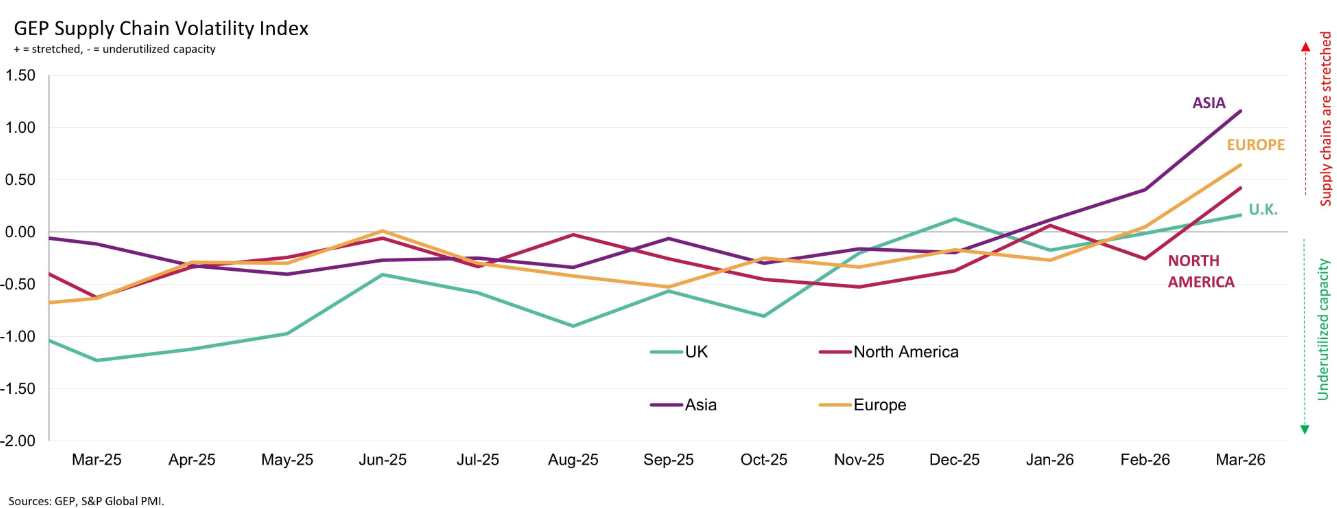
One of the biggest drivers behind the latest disruption wave is geopolitical instability. Ongoing tensions in West Asia and attacks around the Red Sea shipping corridor have forced major carriers to reroute vessels away from the Suez Canal, increasing transit times and fuel costs significantly.
The Red Sea route handles a major share of global container trade between Asia and Europe. When vessels avoid the region and move around the Cape of Good Hope instead, shipping journeys become longer and more expensive. This has already contributed to rising freight rates across several trade corridors.
At the same time, growing tariff uncertainty, changing trade policies, and rising protectionism are creating additional stress for exporters and supply chain planners. Businesses are struggling to forecast costs accurately as trade regulations continue shifting across multiple regions.
Supply chain experts also warn that climate-related disruptions, labor shortages, and port congestion remain ongoing structural risks for global logistics networks.
Impact on Freight and Logistics
Freight markets are beginning to react sharply to the latest disruptions. Shipping companies have introduced higher surcharges on several international routes, while container availability has tightened in key export regions.
Air cargo demand has also increased in some sectors as companies attempt to avoid delays in ocean freight networks. However, higher air freight costs are creating additional pressure for exporters already dealing with uncertain global demand conditions. Many freight forwarders are now operating in a highly unpredictable environment where shipping schedules, transit reliability, and transportation pricing can change rapidly within days.
Exporters Are Facing New Challenges
For exporters, rising supply chain stress affects far more than delivery timelines. Delays in cargo movement can disrupt production schedules, increase inventory costs, and create payment uncertainties across global trade operations. Small and medium exporters are particularly vulnerable because they often have limited pricing power and lower operational flexibility compared to larger multinational companies. Rising freight rates and unpredictable shipment timelines can significantly affect profitability. Businesses dependent on imported raw materials are also facing challenges as transit delays increase procurement uncertainty. Many companies are now being forced to maintain larger inventory buffers to reduce operational risks.
The Return of Supply Chain Diversification
One major trend accelerating again is supply chain diversification. During the pandemic, companies realized the risks of depending too heavily on single sourcing regions or limited shipping routes.
That strategy is returning in 2026. Businesses are increasingly exploring:
multi-country sourcing,
regional manufacturing hubs,
nearshoring strategies,
and alternative logistics corridors.
India, Vietnam, Mexico, and parts of Southeast Asia continue attracting manufacturing and sourcing interest as companies attempt to reduce dependency on concentrated supply chain networks.
Governments are also investing more heavily in logistics infrastructure, port modernization, and supply chain resilience programs to strengthen domestic trade competitiveness.
Technology Is Becoming Critical
As disruptions increase, businesses are relying more heavily on technology-driven supply chain management systems. AI-powered logistics platforms are being used to monitor shipment risks, forecast delays, optimize routing, and improve inventory planning.
Trade intelligence systems can now analyze:
vessel movement,
port congestion,
customs activity,
weather disruptions,
and geopolitical developments
to help businesses make faster operational decisions.
Platforms focused on trade compliance and shipment visibility are becoming increasingly important as companies attempt to navigate a more volatile trade environment.
A Structural Shift in Global Trade
Many analysts now believe the current disruptions are not temporary events but part of a broader structural transformation in global commerce.
Over the past decade, global supply chains were optimized heavily for efficiency and low cost. However, recent crises have exposed the risks of highly concentrated manufacturing and logistics systems.
Today, resilience is becoming just as important as efficiency.
Businesses are increasingly prioritizing:
supply chain flexibility,
operational visibility,
compliance automation,
and risk diversification.
This shift is expected to reshape global trade strategies over the coming years.
The Outlook for 2026
While global trade volumes continue growing overall, supply chain volatility is likely to remain elevated throughout 2026. Geopolitical uncertainty, shipping disruptions, fluctuating freight costs, and changing trade regulations continue creating operational complexity for businesses worldwide.
For exporters and logistics companies, the current environment highlights the importance of resilient supply chain planning, stronger digital infrastructure, and adaptive operational strategies.
The period of relatively stable globalized supply chains that existed before the pandemic may not fully return. Instead, businesses are entering an era where agility, technology adoption, and risk management become central to global trade competitiveness.