
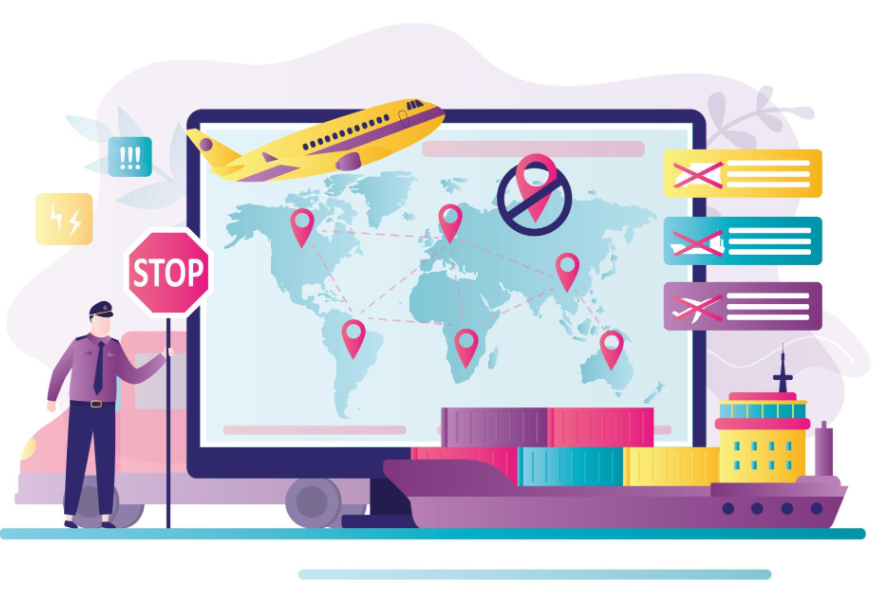
Trade Compliance and ESG: The New Global Business Requirement
Global trade in 2026 is operating in a very different environment than it did just a few years ago. Sanctions are expanding faster, export controls are becoming more technology-focused, and Environmental, Social, and Governance (ESG) standards are now directly influencing trade compliance decisions. For exporters, compliance is no longer only about avoiding penalties. It has become a core business strategy that affects supply chains, customer trust, financing, and international market access.
Governments across the United States, European Union, United Kingdom, and Asia-Pacific regions are tightening restrictions on sensitive technologies, high-risk jurisdictions, carbon-intensive imports, and forced labor exposure. At the same time, regulators expect companies to maintain transparent, audit-ready compliance systems backed by reliable trade data and supply chain traceability.
Why Global Sanctions Are Becoming More Complex
The sanctions landscape in 2026 is no longer limited to traditional embargoes or restricted-country lists. Regulators are increasingly targeting indirect exposure, third-party intermediaries, shadow supply chains, and ownership structures designed to bypass controls. This creates a major challenge for exporters that rely on distributors, logistics partners, and overseas sourcing networks.
Recent enforcement activity shows growing scrutiny on advanced technology exports, semiconductor and AI-related products, dual-use goods, maritime shipping networks, and financial transactions linked to sanctioned entities. Experts note that sanctions enforcement is becoming smarter and more aggressively enforced, with authorities focusing heavily on supply chain visibility and hidden ownership risks.
In addition, geopolitical tensions involving Russia, China, Iran, and Cuba continue to reshape global trade routes and compliance obligations. New restrictions announced in 2026 have expanded secondary sanctions risks, especially for exporters dealing with high-risk sectors or indirectly connected financial institutions.
The Rise of ESG in Trade Compliance
One of the biggest changes in global trade is the convergence of ESG and compliance. Sustainability is no longer treated as a separate corporate initiative. Regulators now expect exporters to prove that their products and supply chains meet environmental and ethical standards.
The European Union’s deforestation regulation is a strong example of this shift. Companies importing commodities such as coffee, soy, cocoa, cattle, timber, and palm oil into Europe must verify that their goods are not linked to recently deforested land. Even though implementation timelines have been extended, businesses have already started restructuring supply chains to meet the new requirements.
Similarly, forced labor enforcement has intensified worldwide. Authorities increasingly require transaction-level traceability and documented evidence instead of simple supplier declarations. This means exporters must now maintain deeper visibility into sourcing practices, supplier relationships, and manufacturing origins.
Key ESG Compliance Drivers in 2026
The growing integration between ESG and trade compliance is being driven by stricter carbon reporting obligations, forced labor regulations, mandatory supplier traceability systems, and increasing pressure on companies to demonstrate ethical sourcing practices. Businesses that fail to address ESG exposure now face shipment delays, customs holds, financial penalties, and reputational damage that can affect long-term international partnerships.
Technology Exports Face Higher Scrutiny
Technology exporters are among the most affected industries in 2026. Governments are increasing export controls on semiconductors, artificial intelligence systems, cybersecurity tools, advanced manufacturing equipment, and dual-use technologies.
Several experts expect export licensing requirements and end-user verification processes to become even stricter throughout the year. This has created a new compliance challenge for exporters operating in electronics, AI software, aerospace, telecommunications, defense manufacturing, and advanced computing industries. The biggest risk is no longer direct sales to sanctioned entities. Regulators are increasingly concerned about indirect transfers through intermediaries, re-export routes, and third-party procurement networks.
Global Compliance Pressure Areas in 2026
Businesses are now expected to maintain real-time sanctions screening systems, beneficial ownership checks, automated transaction monitoring, AI-assisted compliance systems, and continuous supplier due diligence. According to multiple compliance reports, regulators increasingly expect organizations to adopt technology-enabled and audit-ready compliance programs rather than relying on manual processes.
Why Supply Chain Visibility Matters More Than Ever
Modern trade compliance is becoming heavily data-driven. Customs authorities and regulators want companies to demonstrate where products originate, how they are transported, who controls the transaction, and whether ESG risks exist anywhere in the chain.
This is especially important because sanctions evasion networks have become more sophisticated. Reports highlight growing use of shadow fleets, shell companies, document manipulation, and hidden ownership structures to bypass sanctions enforcement.
For exporters, incomplete supply chain visibility has become a direct business risk. Organizations with fragmented trade data face greater exposure to shipment seizures, customs delays, regulatory investigations, financial penalties, banking restrictions, and reputational damage. Companies investing early in trade intelligence, supplier mapping, and compliance automation are likely to gain a competitive advantage as global regulations continue to tighten.
The Future of Trade Compliance
Trade compliance in 2026 is no longer just a legal function. It has become part of strategic business operations. Exporters must now manage sanctions risk, ESG obligations, geopolitical uncertainty, and digital compliance requirements simultaneously.
The businesses that will succeed are those that treat compliance as a proactive investment instead of a reactive obligation. Companies that build resilient supply chains, transparent sourcing systems, and technology-enabled compliance frameworks will be better prepared for the next phase of global trade regulation.
As sanctions evolve and ESG standards become more embedded in international commerce, exporters face a clear reality: compliance is now directly connected to growth, reputation, and long-term market access.