
G7’s Warning on “Economic Coercion” Signals a Bigger Shift in Global Trade
The latest statement from the Group of Seven is more than a diplomatic message. It reflects a major shift taking place in global trade and supply chain strategy.
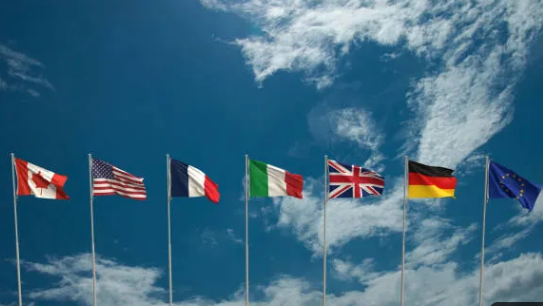
During meetings in France, G7 trade ministers criticised what they described as “economic coercion” through export restrictions on critical minerals. Although China was not named directly, the message was widely understood as a response to Beijing’s growing control over strategic supply chains.
This matters because critical minerals are no longer just industrial commodities. They are becoming instruments of geopolitical influence.
Why Critical Minerals Matter So Much
Critical minerals are essential for the modern economy. Electric vehicles, semiconductors, renewable energy systems, defense equipment, and advanced electronics all depend heavily on them.
Over the past decade, China has built significant dominance across rare earth processing and mineral supply chains. That dominance gives it strategic leverage because many advanced economies rely on these materials for manufacturing and technology production.
The G7’s concern is not simply about trade competition. It is about dependence. If a single country can restrict access to critical materials, entire industries can face disruption.
Trade Is No Longer Just About Cost
For years, globalization focused mainly on efficiency. Companies sourced from the cheapest locations and optimized supply chains around low production costs.
That model is now changing. Governments increasingly see supply chains as part of national security. Instead of prioritizing only cost reduction, countries are now prioritizing resilience and strategic control.
This is why terms like:
“secure sourcing”
“supply chain resilience”
“economic security”
have become central to global trade discussions. The G7 statement reflects this transition clearly. The global economy is moving away from excessive dependence on concentrated suppliers and toward diversified trade networks.
A New Trade Model Is Emerging
The old trade model rewarded the cheapest and fastest production systems. The emerging model rewards countries that can provide stable, reliable, and politically secure supply chains.
This shift is already influencing:
manufacturing investments
trade agreements
export regulations
industrial policy
Companies are now evaluating geopolitical risk alongside operational efficiency.
Why This Matters for India
For India, this shift creates a major opportunity. As Western economies attempt to reduce dependence on concentrated supply chains, countries like India could emerge as alternative manufacturing and sourcing destinations. However, attracting this opportunity will depend less on labor costs and more on operational efficiency.
Global businesses want predictable logistics, faster customs processes, and smoother trade compliance systems. Countries that reduce friction in international trade will gain long-term advantages. India already has manufacturing potential and a large domestic market. The challenge is improving the systems surrounding trade execution.
The Bigger Message Behind the G7 Statement
The most important takeaway from the G7 discussion is that trade is becoming increasingly political. Export controls, technology restrictions, tariffs, and mineral access are now being used as strategic tools. Economic influence is no longer exercised only through military or financial power-it is also exercised through supply chain control.
This is why critical minerals have become so important. Countries that dominate future supply chains will influence global manufacturing, technology development, and energy transitions for years to come.
Conclusion
The G7’s criticism of “economic coercion” signals a broader restructuring of global trade priorities. The era of globalization built purely on efficiency is slowly giving way to a model built on resilience and strategic independence. Countries are now competing not only through production capacity, but through their ability to create secure and reliable trade ecosystems.
For India, this transition represents a rare opportunity. The countries that modernize logistics, simplify compliance, and strengthen supply chain infrastructure will become the next major centers of global trade.