
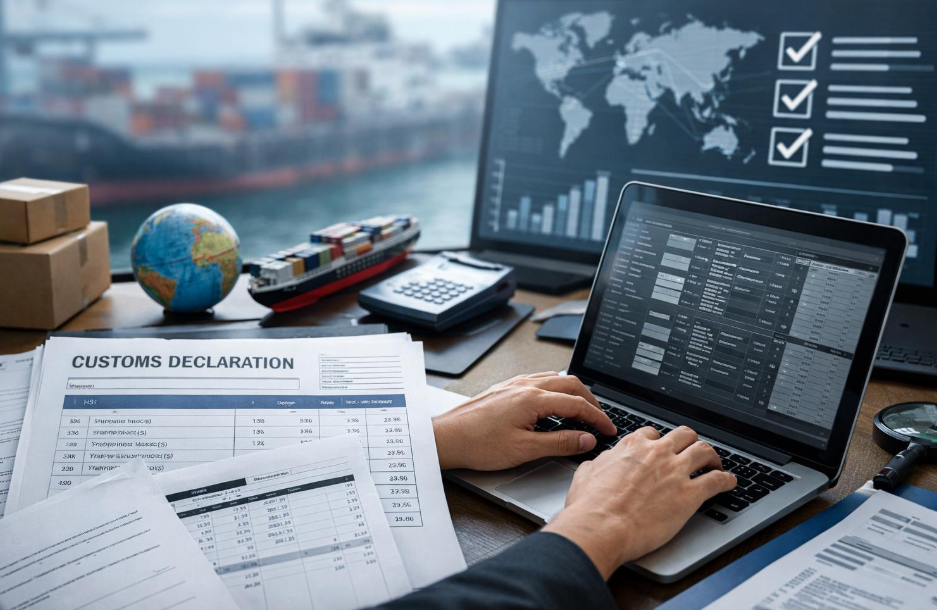
Global trade moves on paperwork. Every international shipment depends on invoices, bills of lading, packing lists, certificates of origin, HS codes, and customs declarations being accurate and consistent. Even a small mismatch in shipment weight, product classification, or invoice value can lead to border delays, penalties, or shipment seizures.
As international trade regulations become more complex, businesses are increasingly turning to Artificial Intelligence (AI) to reduce customs and documentation errors before shipments even reach the border.
Why Customs Documentation Errors Are Increasing
International shipping now involves multiple countries, changing tariff structures, evolving compliance rules, and digital filing requirements. Manual processes are struggling to keep up.
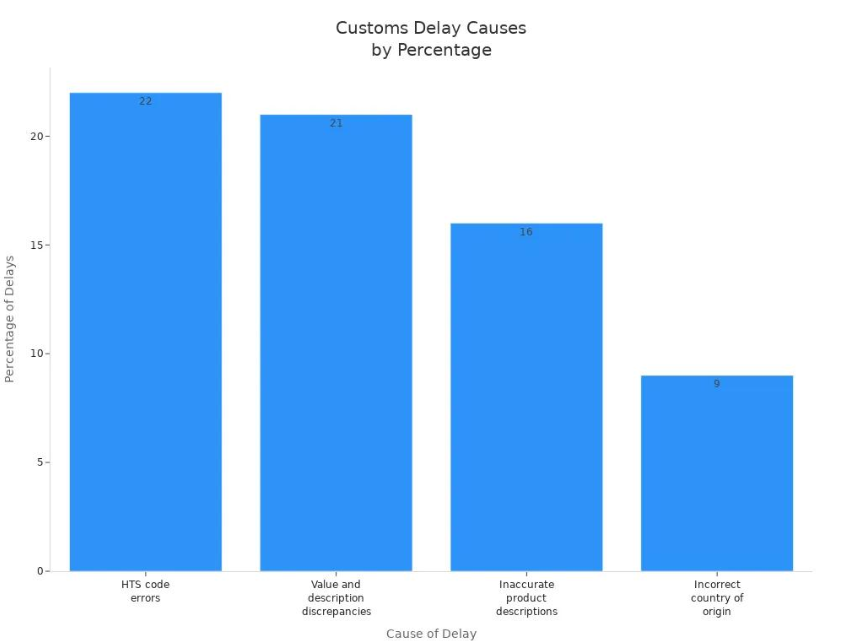
According to recent trade compliance research, incorrect or incomplete documentation remains one of the biggest reasons for customs delays worldwide. Common problems include:
Incorrect HS code classification
Invoice and packing list mismatches
Missing certificates or declarations
Incorrect country-of-origin details
Data entry mistakes during filing
Industry studies show that documentation issues are responsible for a major share of customs clearance delays globally.
How AI Is Transforming Customs Compliance
AI is changing customs operations from reactive correction to proactive prevention. Instead of waiting for customs authorities to flag errors, AI systems now detect inconsistencies in real time before documents are submitted.
1. Automated Document Verification
AI-powered systems can scan and compare multiple shipping documents within seconds. These systems extract data from invoices, bills of lading, certificates, and declarations, then cross-check them for inconsistencies.
For example, if the invoice mentions 4,200 kg while the bill of lading shows 4,202 kg, the AI system immediately flags the mismatch. This reduces the risk of manual oversight and speeds up document preparation.
2. Smarter HS Code Classification
HS code classification is one of the most sensitive areas in trade compliance. A single incorrect tariff code can result in overpayment, underpayment, penalties, or shipment detention.
AI systems are now trained on millions of historical trade records and customs rulings to recommend accurate HS codes based on product descriptions and specifications.
Modern AI platforms also continuously update classification suggestions as tariff regulations change across countries.
3. Real-Time Compliance Monitoring
Traditional compliance teams often rely on periodic manual reviews. AI systems work continuously.
They monitor:
Sanction list updates
Tariff changes
Country-specific trade restrictions
Free trade agreement eligibility
Customs regulation updates
This helps businesses avoid outdated documentation practices and remain compliant across multiple markets.
AI Reduces Delays and Operational Costs
The financial impact of customs errors is significant. Shipment delays can trigger demurrage fees, storage charges, missed delivery deadlines, and customer dissatisfaction.
Several logistics technology providers report measurable improvements after implementing AI-driven customs automation:
AI Compliance Benefit | Reported Impact |
Documentation accuracy improvement | Up to 50% |
Reduction in shipment delays | Up to 45% |
Reduction in manual audit workload | Around 35% |
Faster customs document processing | Up to 60% faster |
Human Expertise Still Matters
Despite major advances, AI is not replacing customs brokers or compliance professionals entirely.
Trade experts still play a critical role in:
Exception handling
Regulatory interpretation
Final compliance review
High-risk shipment decisions
Country-specific legal analysis
Industry professionals note that AI works best as an assistive system rather than a fully autonomous replacement. Human oversight remains essential, especially for complex classifications and regulatory disputes. (Reddit)
The future of customs compliance will likely combine AI automation with human expertise.
The Future of AI in Customs Operations
AI adoption in global trade is accelerating rapidly. Businesses are now integrating AI into ERP systems, logistics software, customs brokerage platforms, and supply chain management tools.
Future AI systems are expected to provide:
Predictive customs risk scoring
Automated tariff optimization
Voice-enabled compliance assistants
AI-generated customs filings
Real-time cross-border regulation tracking
As global trade becomes more data-driven, companies that adopt intelligent compliance systems early will likely gain a significant operational advantage.
Conclusion
Customs and documentation errors are no longer just administrative issues. They directly affect delivery timelines, operational costs, and global business competitiveness.
AI is helping businesses move from manual paperwork management to intelligent compliance automation. By improving accuracy, reducing delays, and identifying risks before submission, AI is becoming an essential tool in modern international trade operations. However, the most effective strategy is not replacing humans with AI, but combining AI-powered efficiency with experienced compliance oversight. Businesses that strike this balance will be better prepared for the increasingly complex future of global trade.